President Harry S. Truman was known for having a sign on his desk that said "The buck stops here". It was his way of saying that he would take responsibility for what came to him and not "pass the buck" to someone else. Maybe you've noticed it, too. There is a whole lot of "passing the buck" in today's culture. Every one has an excuse why "It's not my fault!".
I once heard a definition of an excuse as "A lie disguised as a reason". Sounds kind of harsh, but how often do we offer an excuse when we should just take responsibility?
We are often willing to forgive ourselves for something we wouldn't
let someone else off the hook for. Or we blame someone else for our own response to something that they did. It seems people are more motivated to get out of responsibility than to accept it.
There used to be an accepted standard for right and wrong and everyone knew that doing the right thing was the most important thing. If we examine ourselves we still know what is right and wrong. It's called a conscience and our Creator made us that way. We've learned to ignore that voice because sometimes doing the right thing can be really hard. So we pass the buck and make it someone or something else's fault that we don't do it or someone else's job to do it. We've all got excuses. I'm talking to myself as well!
We each have a tendency toward certain weaknesses, but we can never use that as an excuse for not doing what is right. It may be harder for some of us than others to do what is right in certain situations because of our natural bent, but the decision to do the right thing regardless of our natural bent is always up to us.
I'm through passing the buck. What about you? "The buck stops here"
Monday, July 2, 2012


Thursday, June 28, 2012
Present!
Remember the days when teachers took attendance expecting the student response, "Present!"? These days a teacher calling the attendance roll might be lucky enough to get a student who cheerfully answers, "Here!" Working in a school I have noticed students responding to their attendance name call in a variety of ways, many respectful, but often with a bored, matter-of-fact, let's-just-get-this-over-with attitude. How often do you and I approach life that way? Are we truly "present" as we interact with people? Do our families and loved ones really have our attention or are we projecting an attitude that says, "Let's just get this over with. I have something else I'd rather be doing"?
I'll be honest with you. I am pretty tired today and it's hard to be "present" even as I write this. Yet, this day is just as sacred as any other. If I "check out" while in conversation with those around me, what will I miss and what will I be communicating to them about their value? I understand that we all need a little slack sometimes. Today is definitely one of those days for me! However, I don't want to use fatigue as an excuse to devalue those around me and brush off their concerns. They deserve the best I can give, even if I am not my best.
That's it, short and sweet. Be present. Each day is a gift and each person a unique and valuable creation of God. Is there any better reason to be "present"?
Saturday, June 9, 2012
Transit Perspective
' "You see the bigger picture" when you look through the telescope at the
heavens, he said. "You don't get so stressed out by living when you
realize that we're just this little speck in space." ' That quote was taken from a USA Today article about the many people who took the time and effort to watch the recent Transit of Venus across the sun. The gentleman quoted was identified as a neurosurgeon. What a perspective to have when you are responsible for people's lives! What a perspective to offer them as they face whatever difficulties have brought them to a neurosurgeon.
Years ago I remember my two older children coming home from elementary school in the middle of an argument. Evidently, they had started arguing on the bus and the whole bus heard about it. Of course, I can't remember a thing about the argument now, and if I asked them they probably wouldn't remember it at all. I was mortified at the time, so disappointed and embarrassed that they would have it out in a public place rather than keeping it quiet and talking, or fighting, about it at home. I saw it as a reflection on my parenting and felt like a total failure. But as I thought it over and prayed as best as I could in the midst of my mortification, I had a mental picture of the whole earth and then the picture zoomed down until it was a picture of my kids on the bus. Suddenly, the whole thing didn't seem like such a big deal. We talked about it and then it was over.
So often as we face our daily difficulties, or even our larger, more profound difficulties,we get "stressed out". The issue that is troubling us can seem like the most important thing in the world at that moment. Maybe it would be good to keep a photo of the Transit of Venus somewhere to remind us of the larger perspective.
My recent difficulties have not been the kind that put one in "survival mode", although I have experienced those as well. Whether in "survival mode" or daily inconveniences, over the years I have learned to remember that in the larger picture of life these things are just a small speck in transit. Whatever trial I am going through will come to an end, even the ones that have seemed to last for years. At the very end, when my life is over, my life will be that little speck in transit. Then the transit will be over and I will have a permanent Home elsewhere. Keeping that in mind helps me keep the difficulties of my life in transit perspective.
Dear One, whatever you are going through right now is a speck in transit. I don't mean to minimize your difficulty. A life-threatening illness or financial catastrophe caused by job loss or a fluctuating stock market are not small troubles, nor are the emotional difficulties of strained relationships or personal loss. What I mean to say is that when you and I keep a transit perspective on the larger and smaller difficulties of life it helps us to pass through them knowing that there will be an end and to keep that end in view rather than the trouble of the moment.

Sunday, June 3, 2012
Cliff Hanging
I am a cliff hanger. I know that we usually think of cliffhangers as stories without resolution meant to draw you back for the next installment. No, I don't mean that kind of cliffhanger.
When it is time for me to embark on a new adventure, I tend to stand on the cliff looking over the edge and try to evaluate the situation. I am a thinker. I am not a " ready, shoot, aim" person. I want to look before I leap. I want to know where I'm going to land. The difficulty is that usually when you are standing on the cliff, there is a lot of mist at the bottom and you can't really evaluate what kind of landing you are going to make.
I recently made a jump I'd been trying to evaluate for....well, a long time. Maybe you have experienced a nagging feeling that there is something you are supposed to do. As a Christian, when I feel that way I try to determine if that nagging feeling is the still, small voice of God. Over time I became convinced that in this case it was. But in this situation, I basically tried to talk God out of it. Maybe you've done that, too. When the nagging feeling didn't go away, I determined that it really was God and He wasn't giving up. So, even though I don't really know where I am going to land, I made the jump and obeyed that still, small voice.
The thing about it is that once I went ahead and began the process, "made the jump", a lot of my waffling and attempts to make excuses for not doing it seemed to disappear. I am confident that I jumped off the right cliff, so to speak, and that wherever I land will be the right place at the right time.
Sometimes you just have to jump into new things. When you get right down to it, the reason that I wasn't willing to jump was lack of trust. A lack of trust in my ability to follow through in what God was asking me was not really the problem. At the core, my unwillingness to jump was a lack of trust in God Himself. If He is asking me to do something, to jump off the cliff, then He's got to have the landing all figured out even though I can't see it, right? When I land, I'll tell you more about the trip.
Are you hanging onto a cliff right now? If you are, what is your reason for not making the jump? I can tell you from experience that once you commit yourself and get airborne, the view is going to be awesome. So stop hanging onto the cliff and enjoy the ride!
Thursday, May 24, 2012
Having What You Don't Want or Wanting What You Don't Have
"Having what you don't want or wanting what you don't have." I once heard this offered as a definition of suffering. Sound kind of trite? Does it mean more when I tell you that the woman offering the definition had, at that point in her life, outlived two husbands? The second she lost to cancer. The first had died with four others, a missionary to Ecuador murdered by the very tribe they had come to reach. Her name is Elisabeth Elliot. This was a woman who understood deep suffering and yet offered a definition that was intended to include every person listening. Why would she do that? Her intention was to offer an approach to suffering that every person listening could apply no matter what the degree of their suffering, and because she had lived it, what she had to say would grab the attention of her listeners. She definitely grabbed mine!
At the time, I definitely had what I didn't want and wanted what I didn't have. I was a young mom with two small children and I wanted my own home. Instead, I was living in my parents' downstairs family room, with only one car in our family, while my husband had gone back to school to finish a degree. I was spending long days alone with two small children in a situation that I had very little control over. By Elisabeth Elliot's definition I was suffering and I didn't like it! But, what I learned most through that experience was that the only thing I really have control over in situations of suffering is my response. Elisabeth Elliot's words helped me a great deal.
I remember very clearly listening to her message on cassette tape with a Walkman (remember those?) after my children had gone to bed. Within the first few moments she had shared her definition and she had my attention. I also remember very clearly the two aspects of response that she shared with a group of Christian women. Worship and offering. From a Christian perspective, what I understand that to mean is to first recognize that God is God and is somehow a part of whatever my situation of suffering entails and then giving the situation back to Him in trust that somehow He's going to use it for good, either for me or someone else, usually both. In that response is the acceptance of not being in control and then the willingness to relinquish the control to someone else.
Simple, but not easy by any stretch of the imagination. Yet, as I began to apply that response to my situation I found myself less often unhappy and more able to enjoy life as it was. It has become my overall response to life.
Let's face it, we all often have what we don't want and want what we don't have. When that occurs, not if, the only thing you or I can really do is to admit that Someone else is in control and trust Him to make something good of it. Whatever your degree of suffering at the moment, Dear One, I wish you peace.
If you'd like to learn a bit more about Elisabeth Elliot you can click here to visit her website. She is currently 85 years old and suffering from the health issues that come with advanced age. From what her husband posts, since she is no longer able to do this for herself, it seems clear that she has continued to follow her own advice in her current suffering.
This link will take you to a transcript of Elisabeth's past radio program, Gateway to Joy, where she discussed suffering using this definition. Defining Suffering
Saturday, May 5, 2012
My Life, My Fortune and My Sacred Honor
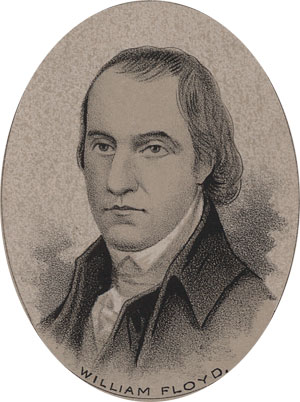 How many people do you know who can say "We have a signer in the family"? By a "signer" I mean someone who actually signed the Declaration of Independence. Any signers in your family? No? A co-worker casually made this statement the other day. I was flabbergasted that she couldn't remember the name of the ancestor who had actually signed the document that made our country a reality. To her it's just a part of her family's history. I guess I can understand that.
Being somewhat interested in history, I was very interested in the name of her signer, and being that I work in a library I immediately found a book on our shelves that gives a biographical sketch of each signer. My friend recognized the name of her ancestor and our conversation moved on to other things. Since then I have been reading through the book about the signers of the Declaration.
What has impressed me most is that the historical movies I am most familiar with, those that have sparked my interest in and respect for the signers, do not accurately portray these brave, committed men. Historical accuracy has often been sacrificed for the sake of entertainment value. Conflicts seem to have been blown out of proportion, lampooned almost. As I read each brief sketch I am presented with a man who, in many cases, gave exactly what he pledged when he signed. The closing statement of the declaration says this: "And for the support of this Declaration, with a firm reliance on the protection of Divine Providence, we mutually pledge to each other our Lives, our Fortunes, and our sacred Honor."
These men counted the cost and had decided ahead of time that they were willing to pay it if necessary. Many spent their fortunes to fund the war effort. Several had their properties destroyed. Several died having lost everything as a result of their support for the Revolutionary cause. Several became so physically weakened because of their untiring efforts to secure an independent America that their health deteriorated to the point of death before, or shortly after, the successful completion of the war. Several actually participated in the battles, leading others and suffering all the consequences of war. Few had the chance to fully enjoy the freedom that they had fought for and left to us. Few of us fully understand the cost of that freedom, though some of us say that we do.
If we truly understood the cost, then we would be willing to make the same pledge. How many people do you know that would be willing to make such a pledge for any cause? "Our lives, our fortunes and our sacred honor." And of those you know willing to make such a pledge, how many do you believe would actually carry it out if necessary? As I contemplate the sacrifice of the signers in order to secure the independence of my country, I am challenged. What cause am I truly passionate about? And if I am passionate, then am I demonstrating that passion by complete commitment? Am I willing to pledge my life, my fortune and my sacred honor?
You and I could probably think of a handful of people who have actually lived their lives with passion and commitment similar to those of the signers. Their lives serve as examples to inspire us that there are still causes worth pledging our lives to with a "firm reliance on the protection of Divine Providence". Without that reliance no cause is worthy or will be successful.
Won't you consider joining me as I endeavor to make such a pledge? I have not yet made it, but I trust that as I count the cost, my reliance on God for strength will enable me to not only make a pledge, but to carry it out if necessary. A pledge of my life, my fortune and my sacred honor.
Click here to read the Declaration of Independence and learn a little more about the signers by clicking on their names at the end.
Tuesday, April 24, 2012
MIlestones of a Miracle
It may sound strange, but almost since the first year of our marriage Tom and I have celebrated the anniversary of our engagement. Twenty six years ago on April 19, 1986 we got engaged. That is a miracle. And the fact that we have been happily married for 25 year is a miracle.Miracles need to be remembered and celebrated.
Interestingly enough, we celebrated another odd anniversary this week. It was 32 years ago this month that Tom and I played King Arthur and Queen Guinevere in the musical Camelot. It was our senior year of high school. (Yes, we graduated from high school a loooong time ago!) This past weekend our high school alma mater did Camelot again for the first time in 32 years and Tom and I went to see it. We had to see it because Camelot is part of our miracle story.
At the time we did the play in high school our relationship was strained. Tom and I had known each other since elementary school, had been friends and had the potential for a deeper relationship even then. Thankfully, that didn't materialize at the time. We would have been stupid, to put it bluntly, and caused each other a great deal of pain. We were different people then and would have made very different choices. At the time of Camelot, we barely spoke to each other off stage while we portrayed a married couple on stage. That is what makes Camelot a part of our miracle story.
Even without speaking to each other offstage we were able to connect with the characters and their relationship as portrayed in the musical. Arthur and Guinevere came together through an arranged marriage but grew in affection and respect for each other. He dreamed of leading his kingdom well and changing things for the better while she encouraged him, helped him think things through and supported his efforts. If you know the story, then you know everything fell apart when Lancelot came on the scene, but even when Guinevere's passion turned to Lancelot, she never stopped caring for Arthur or believing in his dream. We connected so deeply with the characters that the end of the production was difficult. Tom pulled me aside to "say good-bye" at a cast party and in response, I wrote a letter from "Guinevere" to "Arthur" encouraging him to hold on to his dreams. He still has the letter.
I like to say that years later Tom and I "met again in church". Both our lives had changed dramatically as a result of our individual commitments to Christ. If we had come together before that time our story would have probably been similar to Arthur and Guinevere in that it would have ended in pain to us both. The miracle is that we came together at all and that because of our changed lives we have been able to succeed where Guinevere and Arthur failed.
So, we celebrate the milestones of our miracle, like our engagement anniversary or 25 years of marriage. We know who we were. Guinevere and Arthur remind us who we were and make us very grateful for who we have become.
Subscribe to:
Posts (Atom)