"Having what you don't want or wanting what you don't have." I once heard this offered as a definition of suffering. Sound kind of trite? Does it mean more when I tell you that the woman offering the definition had, at that point in her life, outlived two husbands? The second she lost to cancer. The first had died with four others, a missionary to Ecuador murdered by the very tribe they had come to reach. Her name is Elisabeth Elliot. This was a woman who understood deep suffering and yet offered a definition that was intended to include every person listening. Why would she do that? Her intention was to offer an approach to suffering that every person listening could apply no matter what the degree of their suffering, and because she had lived it, what she had to say would grab the attention of her listeners. She definitely grabbed mine!
At the time, I definitely had what I didn't want and wanted what I didn't have. I was a young mom with two small children and I wanted my own home. Instead, I was living in my parents' downstairs family room, with only one car in our family, while my husband had gone back to school to finish a degree. I was spending long days alone with two small children in a situation that I had very little control over. By Elisabeth Elliot's definition I was suffering and I didn't like it! But, what I learned most through that experience was that the only thing I really have control over in situations of suffering is my response. Elisabeth Elliot's words helped me a great deal.
I remember very clearly listening to her message on cassette tape with a Walkman (remember those?) after my children had gone to bed. Within the first few moments she had shared her definition and she had my attention. I also remember very clearly the two aspects of response that she shared with a group of Christian women. Worship and offering. From a Christian perspective, what I understand that to mean is to first recognize that God is God and is somehow a part of whatever my situation of suffering entails and then giving the situation back to Him in trust that somehow He's going to use it for good, either for me or someone else, usually both. In that response is the acceptance of not being in control and then the willingness to relinquish the control to someone else.
Simple, but not easy by any stretch of the imagination. Yet, as I began to apply that response to my situation I found myself less often unhappy and more able to enjoy life as it was. It has become my overall response to life.
Let's face it, we all often have what we don't want and want what we don't have. When that occurs, not if, the only thing you or I can really do is to admit that Someone else is in control and trust Him to make something good of it. Whatever your degree of suffering at the moment, Dear One, I wish you peace.
If you'd like to learn a bit more about Elisabeth Elliot you can click here to visit her website. She is currently 85 years old and suffering from the health issues that come with advanced age. From what her husband posts, since she is no longer able to do this for herself, it seems clear that she has continued to follow her own advice in her current suffering.
This link will take you to a transcript of Elisabeth's past radio program, Gateway to Joy, where she discussed suffering using this definition. Defining Suffering
Thursday, May 24, 2012


Saturday, May 5, 2012
My Life, My Fortune and My Sacred Honor
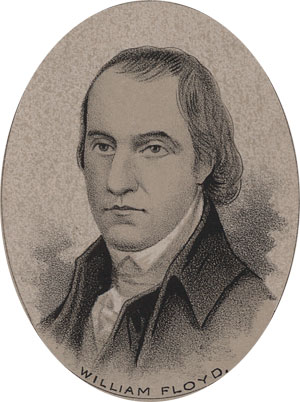 How many people do you know who can say "We have a signer in the family"? By a "signer" I mean someone who actually signed the Declaration of Independence. Any signers in your family? No? A co-worker casually made this statement the other day. I was flabbergasted that she couldn't remember the name of the ancestor who had actually signed the document that made our country a reality. To her it's just a part of her family's history. I guess I can understand that.
Being somewhat interested in history, I was very interested in the name of her signer, and being that I work in a library I immediately found a book on our shelves that gives a biographical sketch of each signer. My friend recognized the name of her ancestor and our conversation moved on to other things. Since then I have been reading through the book about the signers of the Declaration.
What has impressed me most is that the historical movies I am most familiar with, those that have sparked my interest in and respect for the signers, do not accurately portray these brave, committed men. Historical accuracy has often been sacrificed for the sake of entertainment value. Conflicts seem to have been blown out of proportion, lampooned almost. As I read each brief sketch I am presented with a man who, in many cases, gave exactly what he pledged when he signed. The closing statement of the declaration says this: "And for the support of this Declaration, with a firm reliance on the protection of Divine Providence, we mutually pledge to each other our Lives, our Fortunes, and our sacred Honor."
These men counted the cost and had decided ahead of time that they were willing to pay it if necessary. Many spent their fortunes to fund the war effort. Several had their properties destroyed. Several died having lost everything as a result of their support for the Revolutionary cause. Several became so physically weakened because of their untiring efforts to secure an independent America that their health deteriorated to the point of death before, or shortly after, the successful completion of the war. Several actually participated in the battles, leading others and suffering all the consequences of war. Few had the chance to fully enjoy the freedom that they had fought for and left to us. Few of us fully understand the cost of that freedom, though some of us say that we do.
If we truly understood the cost, then we would be willing to make the same pledge. How many people do you know that would be willing to make such a pledge for any cause? "Our lives, our fortunes and our sacred honor." And of those you know willing to make such a pledge, how many do you believe would actually carry it out if necessary? As I contemplate the sacrifice of the signers in order to secure the independence of my country, I am challenged. What cause am I truly passionate about? And if I am passionate, then am I demonstrating that passion by complete commitment? Am I willing to pledge my life, my fortune and my sacred honor?
You and I could probably think of a handful of people who have actually lived their lives with passion and commitment similar to those of the signers. Their lives serve as examples to inspire us that there are still causes worth pledging our lives to with a "firm reliance on the protection of Divine Providence". Without that reliance no cause is worthy or will be successful.
Won't you consider joining me as I endeavor to make such a pledge? I have not yet made it, but I trust that as I count the cost, my reliance on God for strength will enable me to not only make a pledge, but to carry it out if necessary. A pledge of my life, my fortune and my sacred honor.
Click here to read the Declaration of Independence and learn a little more about the signers by clicking on their names at the end.
Tuesday, April 24, 2012
MIlestones of a Miracle
It may sound strange, but almost since the first year of our marriage Tom and I have celebrated the anniversary of our engagement. Twenty six years ago on April 19, 1986 we got engaged. That is a miracle. And the fact that we have been happily married for 25 year is a miracle.Miracles need to be remembered and celebrated.
Interestingly enough, we celebrated another odd anniversary this week. It was 32 years ago this month that Tom and I played King Arthur and Queen Guinevere in the musical Camelot. It was our senior year of high school. (Yes, we graduated from high school a loooong time ago!) This past weekend our high school alma mater did Camelot again for the first time in 32 years and Tom and I went to see it. We had to see it because Camelot is part of our miracle story.
At the time we did the play in high school our relationship was strained. Tom and I had known each other since elementary school, had been friends and had the potential for a deeper relationship even then. Thankfully, that didn't materialize at the time. We would have been stupid, to put it bluntly, and caused each other a great deal of pain. We were different people then and would have made very different choices. At the time of Camelot, we barely spoke to each other off stage while we portrayed a married couple on stage. That is what makes Camelot a part of our miracle story.
Even without speaking to each other offstage we were able to connect with the characters and their relationship as portrayed in the musical. Arthur and Guinevere came together through an arranged marriage but grew in affection and respect for each other. He dreamed of leading his kingdom well and changing things for the better while she encouraged him, helped him think things through and supported his efforts. If you know the story, then you know everything fell apart when Lancelot came on the scene, but even when Guinevere's passion turned to Lancelot, she never stopped caring for Arthur or believing in his dream. We connected so deeply with the characters that the end of the production was difficult. Tom pulled me aside to "say good-bye" at a cast party and in response, I wrote a letter from "Guinevere" to "Arthur" encouraging him to hold on to his dreams. He still has the letter.
I like to say that years later Tom and I "met again in church". Both our lives had changed dramatically as a result of our individual commitments to Christ. If we had come together before that time our story would have probably been similar to Arthur and Guinevere in that it would have ended in pain to us both. The miracle is that we came together at all and that because of our changed lives we have been able to succeed where Guinevere and Arthur failed.
So, we celebrate the milestones of our miracle, like our engagement anniversary or 25 years of marriage. We know who we were. Guinevere and Arthur remind us who we were and make us very grateful for who we have become.
Interestingly enough, we celebrated another odd anniversary this week. It was 32 years ago this month that Tom and I played King Arthur and Queen Guinevere in the musical Camelot. It was our senior year of high school. (Yes, we graduated from high school a loooong time ago!) This past weekend our high school alma mater did Camelot again for the first time in 32 years and Tom and I went to see it. We had to see it because Camelot is part of our miracle story.
At the time we did the play in high school our relationship was strained. Tom and I had known each other since elementary school, had been friends and had the potential for a deeper relationship even then. Thankfully, that didn't materialize at the time. We would have been stupid, to put it bluntly, and caused each other a great deal of pain. We were different people then and would have made very different choices. At the time of Camelot, we barely spoke to each other off stage while we portrayed a married couple on stage. That is what makes Camelot a part of our miracle story.
Even without speaking to each other offstage we were able to connect with the characters and their relationship as portrayed in the musical. Arthur and Guinevere came together through an arranged marriage but grew in affection and respect for each other. He dreamed of leading his kingdom well and changing things for the better while she encouraged him, helped him think things through and supported his efforts. If you know the story, then you know everything fell apart when Lancelot came on the scene, but even when Guinevere's passion turned to Lancelot, she never stopped caring for Arthur or believing in his dream. We connected so deeply with the characters that the end of the production was difficult. Tom pulled me aside to "say good-bye" at a cast party and in response, I wrote a letter from "Guinevere" to "Arthur" encouraging him to hold on to his dreams. He still has the letter.
I like to say that years later Tom and I "met again in church". Both our lives had changed dramatically as a result of our individual commitments to Christ. If we had come together before that time our story would have probably been similar to Arthur and Guinevere in that it would have ended in pain to us both. The miracle is that we came together at all and that because of our changed lives we have been able to succeed where Guinevere and Arthur failed.
So, we celebrate the milestones of our miracle, like our engagement anniversary or 25 years of marriage. We know who we were. Guinevere and Arthur remind us who we were and make us very grateful for who we have become.
Saturday, April 14, 2012
Four Things I Learned From Tim Tebow
I was excited to try out technology new to me. I was looking through digital books I could borrow from the library to read on my iPhone or Kindle when I happened upon Tim Tebow's autobiography, "Through My Eyes". So I thought, "Why not?" and borrowed it. As I read it and got to know this young NFL player a bit better, I think I understood why a kid who was not even 24 years old at the time of writing would even think about publishing a memoir. Interestingly, the book was written on the heels of his successful college career and drafting into the NFL before he came into the forefront at the end of the 2011 NFL season. I am sure it was meant to capitalize on that popularity, but was released into wider recognition. Providential? Perhaps.
Regardless of his intention, here are four things I learned from this kid, Tim Tebow.
1. Who says age makes a difference?! At the young age of 23, recently out of college and starting a new job, Tim Tebow wrote a book about his life. Does it seem somewhat arrogant? Perhaps. Yet people were interested in him, his life and his college career. One thing I know from living in the South for a brief time, football is HUGE and college football is REALLY HUGE. Coming from the South and achieving notoriety as a college football player made Tebow a celebrity there. Why should he wait until he's older to write a book that his college football fans might be interested in? How often have I hesitated to do something because I thought I was too young or too old and lost the opportunity? Tebow decided his age didn't matter and wrote a book that became a best-seller. Who says age makes a difference?
2. Working hard never killed anyone. As Tebow described growing up on a family-run farm in Florida and then his days training for football I was shaking my head trying to understand someone who would endure so much physical discomfort and push himself so hard to be his best as a player. His farm days taught him to work hard, but in training he worked even harder. He seems to be driven in a way that most of us can't even fathom. Yet, that drive and discipline has paid off professionally and also translates into hard work in his other pursuits. How hard am I willing to work to pursue the things I dream about? Have I been willing to put aside personal comfort in order to achieve a goal? Maybe it's time for me to work harder and be more disciplined. Working hard never killed anyone.
3.I need to use whatever platform I have to help others. Even as a college football player, Tebow has continually used his platform of notoriety as a vehicle to raise money for charities and help those in need. Kids in hospitals, orphans in the Philippines, and prisoners are among those he has set out to visit or raise money for. As soon as he became an NFL player he started a foundation to continue to raise money for the causes he has been involved with. The stated mission of the Tim Tebow Foundation is "to bring faith, hope and love to those needing a brighter day in their darkest hour of need." An ambitious mission to be sure. I am almost certain that the proceeds from his book are being used to fund the foundation rather than Tim Tebow. Why wait to write a book until his popularity wanes when he has a platform now to "create a brighter day"? Am I using my much smaller platform to do the most good I can while I can? I think not. I need to use whatever platform I have to help others.
4. Let faith fuel my passion. In his book Tebow shares that his mom and dad chose homeschooling as the education vehicle for all their kids. Tim's mom assigned him a project on Eric Liddell, known to many of us from the movie, "Chariots of Fire". Tebow shares how he identified with Eric Liddell. Like Liddell, he felt that God had made him for ministry, but also for another purpose. Liddell eventually became a missionary to China, but Tebow quotes the scene in the movie where Liddell tells his sister "I believe God made me for a purpose. For China. But He also made me fast and when I run I feel His pleasure." Tebow feels that way about football and it is that faith that fuels his passion for the game. It is also that faith that fuels his passion for life and for helping others. Like Eric Liddell his faith can't be separated for his performance. It is the very root of everything he does, including football. I describe myself as a person of faith, a committed Christian like Tim Tebow. How does my faith translate to passion? Have I let that passion truly ignite in me? It's time to let faith fuel my passion.
I learned a lot from this kid. What about you?
Regardless of his intention, here are four things I learned from this kid, Tim Tebow.
1. Who says age makes a difference?! At the young age of 23, recently out of college and starting a new job, Tim Tebow wrote a book about his life. Does it seem somewhat arrogant? Perhaps. Yet people were interested in him, his life and his college career. One thing I know from living in the South for a brief time, football is HUGE and college football is REALLY HUGE. Coming from the South and achieving notoriety as a college football player made Tebow a celebrity there. Why should he wait until he's older to write a book that his college football fans might be interested in? How often have I hesitated to do something because I thought I was too young or too old and lost the opportunity? Tebow decided his age didn't matter and wrote a book that became a best-seller. Who says age makes a difference?
2. Working hard never killed anyone. As Tebow described growing up on a family-run farm in Florida and then his days training for football I was shaking my head trying to understand someone who would endure so much physical discomfort and push himself so hard to be his best as a player. His farm days taught him to work hard, but in training he worked even harder. He seems to be driven in a way that most of us can't even fathom. Yet, that drive and discipline has paid off professionally and also translates into hard work in his other pursuits. How hard am I willing to work to pursue the things I dream about? Have I been willing to put aside personal comfort in order to achieve a goal? Maybe it's time for me to work harder and be more disciplined. Working hard never killed anyone.
3.I need to use whatever platform I have to help others. Even as a college football player, Tebow has continually used his platform of notoriety as a vehicle to raise money for charities and help those in need. Kids in hospitals, orphans in the Philippines, and prisoners are among those he has set out to visit or raise money for. As soon as he became an NFL player he started a foundation to continue to raise money for the causes he has been involved with. The stated mission of the Tim Tebow Foundation is "to bring faith, hope and love to those needing a brighter day in their darkest hour of need." An ambitious mission to be sure. I am almost certain that the proceeds from his book are being used to fund the foundation rather than Tim Tebow. Why wait to write a book until his popularity wanes when he has a platform now to "create a brighter day"? Am I using my much smaller platform to do the most good I can while I can? I think not. I need to use whatever platform I have to help others.
4. Let faith fuel my passion. In his book Tebow shares that his mom and dad chose homeschooling as the education vehicle for all their kids. Tim's mom assigned him a project on Eric Liddell, known to many of us from the movie, "Chariots of Fire". Tebow shares how he identified with Eric Liddell. Like Liddell, he felt that God had made him for ministry, but also for another purpose. Liddell eventually became a missionary to China, but Tebow quotes the scene in the movie where Liddell tells his sister "I believe God made me for a purpose. For China. But He also made me fast and when I run I feel His pleasure." Tebow feels that way about football and it is that faith that fuels his passion for the game. It is also that faith that fuels his passion for life and for helping others. Like Eric Liddell his faith can't be separated for his performance. It is the very root of everything he does, including football. I describe myself as a person of faith, a committed Christian like Tim Tebow. How does my faith translate to passion? Have I let that passion truly ignite in me? It's time to let faith fuel my passion.
I learned a lot from this kid. What about you?
Tuesday, April 3, 2012
No coffee!
One of my favorite musical theater moments comes from one of my least favorite musicals, "How to Succeed in Business Without Really Trying". In the musical number "Coffee Break" an office full of workers express their despair and dismay that their is "No coffee! No coffee!". An entire musical number is dedicated to their plight. It is is one of the funniest moments in the play.
Good writers of comedy understand that people laugh when they see truth exaggerated. They laugh because they see themselves or someone they know in the comedic character, but most often they won't admit it! "Coffee Break" exaggerates our national coffee addiction. Many of us would recognize our own reaction to "No coffee!", albeit a hyperbolic one. Of course, it might not seem funny first thing in the morning!
So why do I bring this up? It's the week the Christian calendar refers to as Holy Week. The week leading up to Easter, the celebration of Christ's resurrection. The final week of Lent, a time of reflection meant to prepare our hearts to celebrate Easter. It's a tradition to "give up" during Lent as a way to remind ourselves to be in reflection. This year I gave up coffee.
I have occasionally mentioned that to people and their reaction would fit right in "Coffee Break"! To them the thought of "No coffee!" seemed a monumental sacrifice. My sacrifice was so abysmally small compared to His. Even so, I did it because I don't want anything so insignificant to have a place of control in my life. I did it because I dreaded the thought of giving up coffee. That should not be! Do I love coffee more than Christ? How silly!
Have I missed coffee? Sometimes. But not as much as I thought I would. Will I enjoy having coffee on Sunday? Absolutely! But not for coffee's sake. I will enjoy it because I can live without it. I will enjoy it as a way to celebrate the resurrection of Christ and to celebrate His place in my life. A place that I don't want to be overshadowed by something so insignificant as a beverage!
No coffee! No problem. Not now.
Good writers of comedy understand that people laugh when they see truth exaggerated. They laugh because they see themselves or someone they know in the comedic character, but most often they won't admit it! "Coffee Break" exaggerates our national coffee addiction. Many of us would recognize our own reaction to "No coffee!", albeit a hyperbolic one. Of course, it might not seem funny first thing in the morning!
So why do I bring this up? It's the week the Christian calendar refers to as Holy Week. The week leading up to Easter, the celebration of Christ's resurrection. The final week of Lent, a time of reflection meant to prepare our hearts to celebrate Easter. It's a tradition to "give up" during Lent as a way to remind ourselves to be in reflection. This year I gave up coffee.
I have occasionally mentioned that to people and their reaction would fit right in "Coffee Break"! To them the thought of "No coffee!" seemed a monumental sacrifice. My sacrifice was so abysmally small compared to His. Even so, I did it because I don't want anything so insignificant to have a place of control in my life. I did it because I dreaded the thought of giving up coffee. That should not be! Do I love coffee more than Christ? How silly!
Have I missed coffee? Sometimes. But not as much as I thought I would. Will I enjoy having coffee on Sunday? Absolutely! But not for coffee's sake. I will enjoy it because I can live without it. I will enjoy it as a way to celebrate the resurrection of Christ and to celebrate His place in my life. A place that I don't want to be overshadowed by something so insignificant as a beverage!
No coffee! No problem. Not now.
Sunday, March 25, 2012
If The Shoe Fits
It's a small thing. I needed new black shoes for an event. I had a general idea what I wanted, but was open to what I could find. How hard could that be?
But we live in America, the land of endless choices and expensive prices.
I went to one store where the price was reasonable, but the height of the heels were not! I won't go on about that. I found only one pair worth trying on and was quickly out of the store.
The next store offered more choice, but higher prices. I resigned myself to paying more than I wanted to and finally settled on a pair that was comfortable as well as dressy.
Because I always feel like I need to make sure I've explored every option, I took my selection and headed to the clearance racks just to make sure. There I found a pair more comfortable, with more pizazz and at half the price! The first selection went back on the shelf and I checked out happy. No, not happy. Satisfied.
Why was I satisfied? The truth about you and I is that every decision we make is an indicator of our priorities. I was satisfied because this small choice of a new pair of shoes, something insignificant, allowed me to meet my priorities. I could meet my need without being what to me would be extravagant. When I wear them I will continue to feel satisfied because I prefer to use money for more practical and worthy causes.
It is said that one of the best indicators of a person's priorities is their checkbook. I hope that if you were to take a look at mine you would not see me helping myself to a variety of useless purchases. I hope that you would see priorities that include meeting the needs of my family and helping others.
What does your checkbook say about your priorities? Does the "shoe fit"?
But we live in America, the land of endless choices and expensive prices.
I went to one store where the price was reasonable, but the height of the heels were not! I won't go on about that. I found only one pair worth trying on and was quickly out of the store.
The next store offered more choice, but higher prices. I resigned myself to paying more than I wanted to and finally settled on a pair that was comfortable as well as dressy.
Because I always feel like I need to make sure I've explored every option, I took my selection and headed to the clearance racks just to make sure. There I found a pair more comfortable, with more pizazz and at half the price! The first selection went back on the shelf and I checked out happy. No, not happy. Satisfied.
Why was I satisfied? The truth about you and I is that every decision we make is an indicator of our priorities. I was satisfied because this small choice of a new pair of shoes, something insignificant, allowed me to meet my priorities. I could meet my need without being what to me would be extravagant. When I wear them I will continue to feel satisfied because I prefer to use money for more practical and worthy causes.
It is said that one of the best indicators of a person's priorities is their checkbook. I hope that if you were to take a look at mine you would not see me helping myself to a variety of useless purchases. I hope that you would see priorities that include meeting the needs of my family and helping others.
What does your checkbook say about your priorities? Does the "shoe fit"?
Thursday, March 15, 2012
Whatever Happens
Do you excuse your own bad behavior like I do? So many times I can excuse my own impatience or unkind comment by basically quoting the old playground excuse: "She (or he) started it!". As if someone else's bad behavior was responsible for mine! The one thing I always tell my kids is that the only thing we are really responsible for is ourself and our own reaction to things. So, why do I miss when I am shirking that responsibility?
I suppose it's easy to miss when you're close to the situation, but I've recently been challenged to be more vigilant in catching my own self-justification. The challenge came from a short phrase of Scripture that I had read many times before, but this time I took the time to really think about it.
"Whatever happens, conduct yourselves in a manner worthy of the gospel of Christ."(Philippians 1:27a) "Whatever happens". That "whatever" tells me that I have no excuses for poor behavior. As someone who professes to be, not just a Christian, but a committed follower of Jesus, how I react reflects not only on me, but on the gospel of Christ as well. I don't have room for excuses. Of course, I am human and will, at times, react poorly, but it is at those times that how I handle myself becomes even more important. It is then that I have to stand up and admit my wrong and ask for forgiveness from the person I have wronged.
Personally, I am much better at self-justification than apologies. I am actually so good at it that I can fully convince myself that I did nothing wrong. But in order to "conduct myself in a manner worthy of the gospel of Christ" I'm going to have to get a whole lot better at being honest with myself as well as apologizing.
So, if you catch me at one of those moments when I need to be honest and apologize, recognize that I am still working on it. Then maybe you can gently remind me that I wrote this and you can say "Well, YOU started it!" and maybe you'll be able to see me conduct myself in a worthy manner. That is my hope and my goal.
I suppose it's easy to miss when you're close to the situation, but I've recently been challenged to be more vigilant in catching my own self-justification. The challenge came from a short phrase of Scripture that I had read many times before, but this time I took the time to really think about it.
"Whatever happens, conduct yourselves in a manner worthy of the gospel of Christ."(Philippians 1:27a) "Whatever happens". That "whatever" tells me that I have no excuses for poor behavior. As someone who professes to be, not just a Christian, but a committed follower of Jesus, how I react reflects not only on me, but on the gospel of Christ as well. I don't have room for excuses. Of course, I am human and will, at times, react poorly, but it is at those times that how I handle myself becomes even more important. It is then that I have to stand up and admit my wrong and ask for forgiveness from the person I have wronged.
Personally, I am much better at self-justification than apologies. I am actually so good at it that I can fully convince myself that I did nothing wrong. But in order to "conduct myself in a manner worthy of the gospel of Christ" I'm going to have to get a whole lot better at being honest with myself as well as apologizing.
So, if you catch me at one of those moments when I need to be honest and apologize, recognize that I am still working on it. Then maybe you can gently remind me that I wrote this and you can say "Well, YOU started it!" and maybe you'll be able to see me conduct myself in a worthy manner. That is my hope and my goal.
Subscribe to:
Posts (Atom)